


Deciding to trade in your current vehicle is an efficient way to transition into your next ride without the stress, advertising costs, and safety concerns of a private sale. When you trade in your car, you bypass the hassle of listing the vehicle online, answering late-night inquiries, and negotiating with strangers who may try to undervalue your property. Instead, you bring your vehicle directly to our showroom, receive a professional appraisal, and apply that value as a direct credit toward your next purchase.

The entire transaction can be completed in a single visit, allowing you to drive home in a upgraded vehicle the same day. For drivers navigating the daily commute in Phoenix, this streamlined approach saves valuable time. To begin, you can easily value your trade-in online using our digital valuation tool, which provides a preliminary estimate based on real-time market data.
Once you have an initial estimate, the physical process at the dealership is straightforward. Our team conducts a walk-around inspection, verifies the vehicle’s equipment, and performs a brief test drive to assess its mechanical condition. After the appraisal is complete, we present you with a written offer. You can then choose to apply this amount as a down payment toward our new Toyota inventory or explore our current used vehicles to find a model that fits your lifestyle.
If you still owe money on your current vehicle, our finance team will contact your lender to obtain the exact payoff amount and coordinate the paperwork on your behalf. To speak with our team directly about your vehicle’s specific details, you can contact us. When you are ready to visit us for your appraisal, you can easily get turn by step directions to our showroom located at 2020 W Bell Rd, Phoenix, AZ 85023.
How to Estimate Your Car’s Worth and Prepare for the Appraisal
How do you determine a fair market value for your vehicle before stepping foot on a dealership lot? Gaining this baseline knowledge is the foundation of a confident trade-in experience. You can start by researching similar vehicles listed for sale online, paying close attention to matching the exact model year, trim level, engine configuration, and mileage. Online valuation tools compile transaction data from regional wholesale auctions and retail sales to generate a realistic price range.
When establishing your expectations, remember that retail value (what a dealer sells a car for) is different from trade-in value (the wholesale price a dealer pays to acquire the car before spending money on reconditioning, detailing, and marketing). For example, if you are trading in a highly sought-after model like a Toyota RAV4 Hybrid, which features a 2.5L engine and an eCVT transmission, its strong regional demand and impressive fuel economy of 47 city / 40 hwy MPG* will naturally elevate its wholesale trade-in value compared to less efficient alternatives.
To maximize your final offer, taking a few deliberate preparation steps can yield significant financial returns. First, gather all historical maintenance records, including receipts for oil changes, tire replacements, and brake services. Presenting a complete service history proves to the appraiser that the vehicle was responsibly maintained, reducing the perceived risk of hidden mechanical issues.
Second, complete a thorough cleaning of the vehicle. While appraisers are trained to see past superficial dirt, a spotless car makes a powerful first impression. Take these specific steps before your appointment:
- Wash the exterior thoroughly, paying close attention to brake dust accumulation on the wheels.
- Vacuum all carpets, floor mats, and seat crevices to remove dirt and debris.
- Wipe down the dashboard, center console, and door panels with a non-greasy interior cleaner.
- Remove all personal items from the glovebox, door pockets, and trunk compartments.
- Clean all interior and exterior glass surfaces to ensure maximum visibility.
Once your vehicle is clean and your records are organized, you can browse our used vehicle inventory to see what similar models are selling for in our area. If you are planning to upgrade to an exceptionally efficient vehicle to combat hot desert summers, you can also explore our new Toyota hybrid & EV inventory to find your next fuel-sipping model.
What Appraisers Look For: Exterior and Interior Evaluation Factors
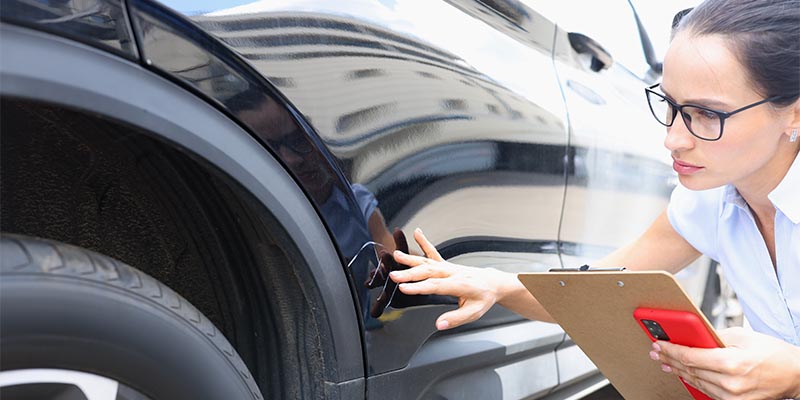
Are you curious about what actually happens when an appraiser walks around your vehicle? Understanding the specific areas of focus during a professional evaluation demystifies the process and helps you anticipate the final offer. Appraisers look at your vehicle through a highly objective lens, assessing how much time and money the dealership must invest to make the car front-row ready for the next buyer.
On the exterior, the appraiser focuses heavily on the overall structural and cosmetic integrity of the body panels. They will inspect the paint for deep scratches, rock chips, and sun damage, which is a common concern in the arid climate of Surprise. They also check the alignment of body panels to ensure there are no uneven gaps, which often indicate past collision repairs that may not have been reported on a vehicle history database.
The condition of the glass is checked for chips or cracks, and the tires are inspected for remaining tread depth and even wear patterns. Uneven tire wear can signal underlying suspension or wheel alignment issues that will require mechanical attention. Physical cosmetic dents do impact the final quote, as the appraiser must deduct the wholesale cost of paintless dent repair or traditional bodywork from the vehicle’s baseline valuation.
Inside the cabin, the appraiser evaluates the level of wear on the upholstery, steering wheel, and high-touch buttons. Deep stains, tears in the fabric or leather, and persistent odors—especially from pets or tobacco smoke—can severely damage a vehicle’s trade-in value because they are difficult and expensive to remediate. The appraiser will also test the functionality of key electronic components, including the air conditioning system, power windows, infotainment screen, and advanced safety features.
If you are trading in a premium family hauler like the Toyota Highlander Hybrid, which features a 2.5L hybrid powertrain producing 243 hp and offers seating for up to 7 passengers, the appraiser will also verify that all rear climate controls, folding seat mechanisms, and safety lane-assist technologies operate flawlessly. To prepare financially for your next purchase while your current vehicle is being evaluated, you can submit an online Credit App to get pre-qualified. Additionally, you can review our current new Toyota inventory to see how your trade-in value can be combined with active dealership incentives.
Managing Negative Equity and Negotiating Your Final Trade Offer

One of the most common questions buyers ask is whether they can trade in a vehicle if they owe more on the auto loan than the car is currently worth. This scenario is known as having negative equity, or being “underwater” on your loan. The short answer is yes, you can absolutely trade in a vehicle with negative equity.
When you trade in a vehicle under these circumstances, the dealership pays off your existing loan in full. The difference between the trade-in value and the loan payoff amount is then rolled into the financing of your new vehicle. For example, if your current car is valued at $15,000 but your loan payoff is $18,000, the remaining $3,000 of negative equity will be added to the principal balance of your new loan.
It is important to understand that rolling negative equity into a new loan will increase your new monthly payment, as you are financing a larger total amount. Our finance team is highly experienced in structuring these deals to keep your payments comfortable. If your current vehicle has sustained body damage that is contributing to its lower value, you can consult our collision repair center to determine if making minor cosmetic repairs beforehand is a cost-effective way to boost your appraisal.
When it comes to negotiating your trade-in value, arriving prepared with data is your greatest asset. Present your online valuation estimates and your organized maintenance records to support your requested figure. Discuss the trade-in value as a distinct transaction from the purchase price of your new vehicle to ensure complete transparency in the numbers.
Our team believes in a transparent, pressure-free negotiation process designed to build long-term trust with drivers from Peoria and surrounding communities. If you have questions about how your trade-in value, negative equity, or down payment will affect your upcoming purchase, give us a quick call to speak with a finance specialist. When you are ready to complete your in-person appraisal, drop by our showroom using our convenient Phoenix location.
Quick Answers Before You Visit
Q: What paperwork and items must I bring to the dealership for a trade-in?
You need to bring the vehicle’s physical title (if you own it outright), the current registration card, a valid driver’s license for all owners listed on the title, and all sets of keys and key fobs. If you still have an active auto loan, bring your current lender’s name, account number, and a recent payoff statement.
Q: Does the color of my car have a measurable impact on its trade-in value?
Yes, vehicle color does influence resale appeal and value retention. Neutral colors such as white, black, silver, and gray consistently command higher trade-in offers because they remain in high demand among pre-owned buyers, whereas highly unconventional or extremely bright colors may receive lower offers due to a smaller target market.
Q: How does high mileage affect the appraisal of my trade-in?
Mileage is a primary driver of depreciation because it correlates directly with mechanical wear. Vehicles that stay below the national average of roughly 12,000 to 15,000 miles per year typically command premium offers, while vehicles with exceptionally high mileage are valued lower to account for the increased likelihood of upcoming component replacements.
Q: How much do past accidents on a vehicle history report reduce my trade-in offer?
A history of accidents can reduce a vehicle’s trade-in value, even if the repairs were completed professionally. Appraisers use history reports to identify structural risks, and a vehicle with a clean, accident-free history will always command a higher valuation than an identical model with a reported collision.
Q: Can I trade in my car if the air conditioning is not blowing cold air?
Yes, you can trade in a vehicle with mechanical issues, including a malfunctioning air conditioning system. Our appraisers will simply deduct the wholesale cost of diagnosing and repairing the system from the vehicle’s trade-in value, saving you the hassle of fixing it yourself before selling.
Your Next Steps to a Confident Trade-In
Building confidence around trading in your vehicle comes down to clear information, proper preparation, and working with a team that values transparency. By understanding how the appraisal process works, gathering your maintenance records, and cleaning your vehicle, you put yourself in the best position to secure a reasonable offer.
Applying your trade-in value toward your next purchase is a smart financial move that can lower your overall loan principal, and reduces your monthly payments. Whether you are looking to upgrade to a highly efficient hybrid SUV or a versatile truck, our team is here to guide you through a seamless, stress-free transaction from start to finish.
Begin your journey today by using our online tool to value your trade-in from the comfort of your home. Once you have your estimate, visit our showroom to experience a straightforward, professional appraisal process that puts you in complete control of your next vehicle purchase.
© 2026 Bell Road Toyota. All rights reserved.
*All mileage is EPA estimated.
Connect with us

